
Approval for pioneering British rocket launch
The UK Civil Aviation Authority (CAA) has granted permission for Skyrora, a British rocket company, to launch its Skylark L rocket from the SaxaVord Spaceport in the Shetland Islands. The expected launch date for this suborbital rocket is in early 2026, with a possible timeframe around May 2026.
The CAA license allows Skyrora up to 16 launches a year, but SaxaVord isn't expected to be ready to facilitate a launch until early 2026. The spaceport is undergoing modifications to accommodate the launches.
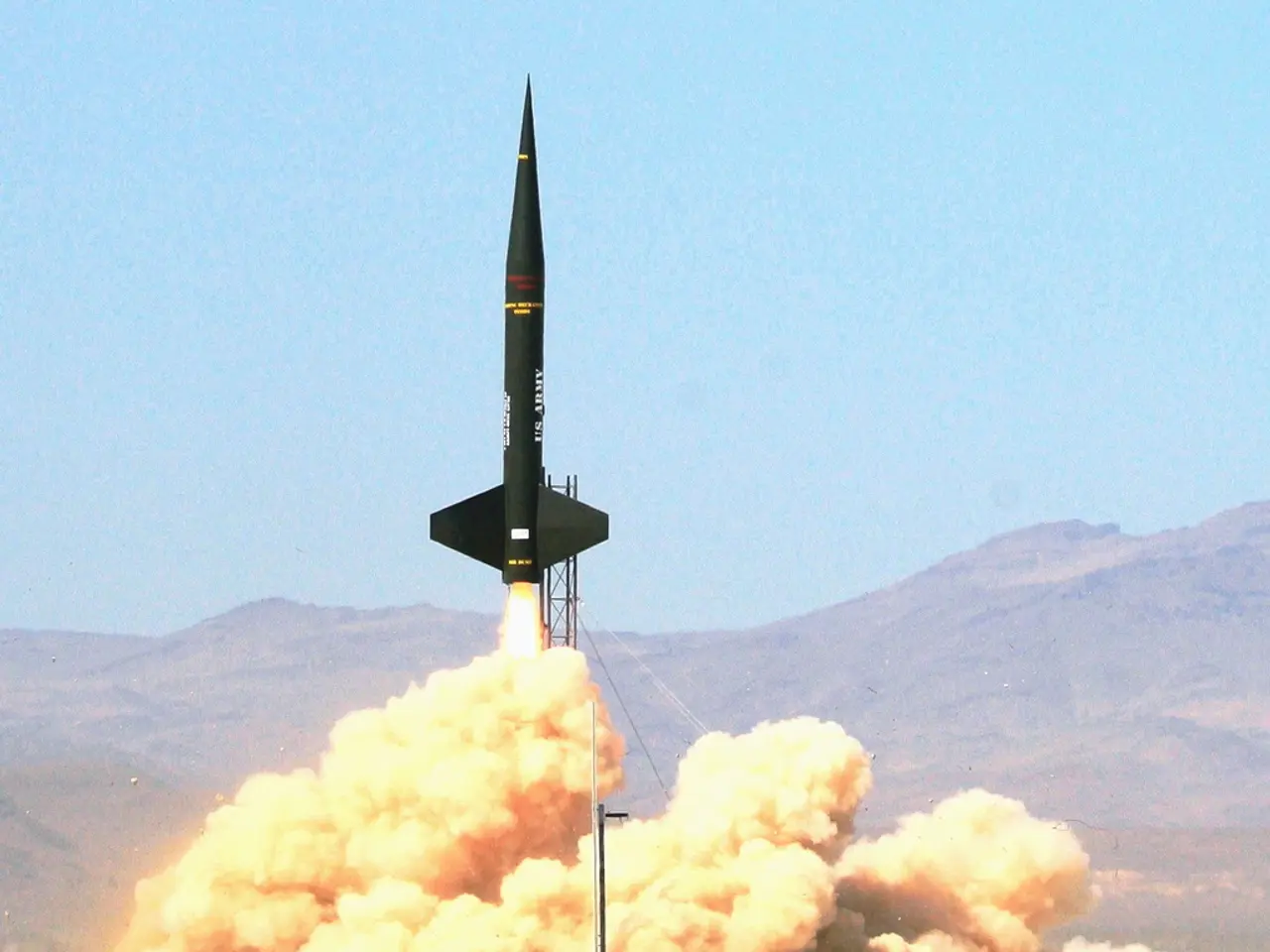
Skyrora's Skylark L is an 11-meter tall rocket designed to carry up to 50 kg payloads to about 102 km altitude. This rocket will be used to test various technologies and the regulatory environment before attempting an orbital flight with its larger vehicle, Skyrora-XL.
If there are delays in launching from SaxaVord, Skyrora may opt to launch from an international location. The company previously launched from Iceland's mobile Langanes site in 2022, and Australia has also been mentioned as a potential alternative location for earlier launch opportunities if the UK site is not ready in time.
The UK aviation and space minister, Mike Kane, congratulated Skyrora for being the first UK company to receive a rocket launch licence. However, it's important to note that the current licence is limited to sub-orbital launches of the Skylark L rocket.
The first (and last) British-built rocket to put a satellite into orbit, Black Arrow, launched from Woomera in 1971. Skylark L is expected to reach an altitude between 120 and 130km, which is well over the internationally-agreed boundary of space, the Karman Line.
If Skyrora transfers its licence, it expects it could launch SkylarkL from Australia's Woomera test range before the end of 2025. The company's CEO, Volodymyr Levykin, stated that they are proud to be leading efforts towards launch activity from the UK.
Smaller rockets, like the Skylark L, potentially mean cheaper and faster launches, offering a "responsive" launch capability to service or support the increasing number of satellites in orbit. Launching from northern latitudes like the UK offers easier access to satellites in polar or sun-synchronous orbits.
It's worth mentioning that another licence was granted earlier this year to the German micro-launch company RFA, but an explosion during testing of their rocket at SaxaVord delayed its plans for a suborbital launch this year.
The emergence of micro-launch companies like Skyrora is an exciting development in the UK's space industry, marking a significant step towards regular satellite launches from British soil.
The British rocket company Skyrora, with its Skylark L rocket, will use the permission granted by the CAA to test various technologies and the regulatory environment, with a focus on sub-orbital launches. With the possibility of delays in launching from SaxaVord Spaceport, Skyrora may consider alternative international locations like Australia's Woomera test range for earlier launch opportunities.




